

किलोग्राम


किलोग्राम (चिह्न: kg) भार की SI इकाई है। एक किलोग्राम की परिभाषानुसार, {{उक्ति|यह अन्तर्राष्ट्रीय मूलरूप किलोग्राम}}, IPK, [1] (IPK; जो अपने फ़्रेंच नाम ली ग्रैंड K से जाना जाता है), के भार के बराबर है, जो कि एक लीटर जल के भार के एकदम बराबर है। यह इकलौती SI इकाई है, जिसका उपसर्ग किलो उसके नाम का भाग है।
दैनिक प्रयोग में हम किलोग्राम को वस्तुओं के भार के रूप में ही जानते हैं, परंतु वह भार ना होकर द्रव्यमान का माप ही है। किसी वस्तु का भार उस पर्लगी गुरुत्वाकर्षण बल का माप होता है और्वह न्यूटन में मापा जाता है।[2].
SI इकाई प्रणाली में कई इकाइयाँ किलोग्राम के सापेक्ष ही परिभाषित हैं, अतएव इसकी स्थिरता महत्वपूर्ण है। जब IPK को समय के साथ बदलता पाया गया, तब CIPM ने 2005 में यह तय किया, कि किलोग्राम को प्रकॄति के मूल स्थिरांकों में परिभशःइत किया जये.[3]
SI गुणक[संपादित करें]
क्योंकि SI उपसर्ग किसी मापन इकाई के नाम या चिन्ह के साथ सीधे नहीं जोड़े जा सकते हैं, इसलिये यह उपसग ग्राम के साथ ही जोड़े जाते हैं, नाकि किलोग्राम के साथ, जिसके साथ पहले ही किलो उपसर्ग लगा है।[4] उदा० एक किलोग्राम का दस लाखवाँ भाग है 1 mg (एक मिलिग्राम), नाकि 1 µkg (एक माइक्रोकिलोग्राम)।
| उपगुणक | गुणक | |||||
|---|---|---|---|---|---|---|
| मान | चिह्न | नाम | मान | चिह्न | नाम | |
| 10–1 g | dg | डेसिग्राम | 101 g | dag | डेकग्राम | |
| 10–2 g | cg | सेंटिग्राम | 102 g | hg | हेक्टोग्राम | |
| 10–3 g | mg | मिल्लिग्राम | 103 g | kg | किलोग्राम | |
| 10–6 g | µg | माइक्रोग्राम (mcg) | 106 g | Mg | मैगाग्राम (टन) | |
| 10–9 g | ng | नॅनोग्राम | 109 g | Gg | गिगाग्राम | |
| 10–12 g | pg | पीकोग्राम | 1012 g | Tg | टेरग्राम | |
| 10–15 g | fg | फ़ेम्टोग्राम | 1015 g | Pg | पेटग्राम | |
| 10–18 g | ag | एट्टोग्राम | 1018 g | Eg | एक्सग्राम | |
| 10–21 g | zg | ज़ेप्टोग्राम | 1021 g | Zg | ज़ेट्टग्राम | |
| 10–24 g | yg | योक्टोग्राम | 1024 g | Yg | योट्टग्राम | |
| ्सामान्य उपसर्ग मोटे अक्षरों में हैं।.[5] | ||||||
(म्यू) माइक्रोग्राम के प्रतीक में टाइपो रेखांकन उपलब्ध नहीं है, यह लैटिन लोअरकेस "यू" से ठीक से नहीं बदला कभी कभी हालांकि है।
- माइक्रोग्राम अक्सर संक्षिप्त है “mcg”, विशेष रूप से दवा और पूरक पोषण लेबलिंग में, "μ" उपसर्ग अच्छी तरह से तकनीकी विषयों के बाहर मान्यता प्राप्त नहीं है के बाद से भ्रम की स्थिति से बचने के लिए। [6] संक्षिप्त नाम "मिलीग्राम", भी 10 ग्राम के बराबर है जो "millicentigram" के रूप में जाना जाता माप की एक अप्रचलित तटरक्षक पोत इकाई के लिए प्रतीक है कि, लेकिन ध्यान दें।
- इकाई का नाम "megagram" शायद ही कभी आम तौर पर केवल माप की इकाइयों के साथ विशेष रूप से कठोर स्थिरता वांछित है जहां संदर्भों में तकनीकी क्षेत्रों में, फिर भी प्रयोग किया जाता है। सबसे प्रयोजनों के लिए, इकाई "टन" के बजाय प्रयोग किया जाता है। टन और उसके प्रतीक, टी, 1879 में CIPM द्वारा अपनाया गया। यह एसआई के साथ प्रयोग के लिए BIPM द्वारा स्वीकार किए जाते हैं एक गैर एसआई इकाई है। अंग्रेजी बोलने वाले देशों में यह आमतौर पर "मीट्रिक टन" कहा जाता है।[7] इकाई का नाम "megatonne" या "मेगाटन" (माउंट) अक्सर अक्सर "teragram" (टीजी) है इस विषय पर वैज्ञानिक कागज में बराबर मूल्य जबकि ग्रीन हाउस गैस के उत्सर्जन पर सामान्य ब्याज साहित्य में प्रयोग किया जाता है कि यह भी ध्यान दें।
देखें[संपादित करें]
टिप्पणी[संपादित करें]
- ↑ BIMP: Resolution of the 1st CGPM (1889) Archived 2013-05-21 at the वेबैक मशीन
- ↑ NIST: Converting Measurements to Metric--NIST FAQs Archived 2008-06-11 at the वेबैक मशीन; the U.K.’s National Weights & Measures Laboratory: Metric Conversions Archived 2008-07-28 at the वेबैक मशीन; and NIST: Fed-Std-376B, Preferred Metric Units for General Use By the Federal Government, Section 5.2.1 Mass (weight) (294 KB PDF, here Archived 2010-08-16 at the वेबैक मशीन).
- ↑ Proceedings of the 94th meeting (October 2005) of the International Committee for Weights and Measures, (1.1 MB zip file, here Archived 2007-01-27 at the वेबैक मशीन)
- ↑ BIPM: SI Brochure: Section 3.2, The kilogram Archived 2011-06-07 at the वेबैक मशीन
- ↑ Criterion: A combined total of at least 250,000 Google hits on both the U.S. spelling (‑gram) and the U.K./International spelling (‑gramme).
- ↑ The practice of using the abbreviation “mcg” rather than the SI symbol “µg” was formally mandated for medical practitioners in 2004 by the Joint Commission on Accreditation of Healthcare Organizations (JCAHO) in their “Do Not Use” List: Abbreviations, Acronyms, and Symbols Archived 2006-10-07 at the वेबैक मशीन because hand-written expressions of “µg” can be confused with “mg”, resulting in a thousand-fold overdosing. The mandate was also adopted by the Institute for Safe Medication Practices. Archived 2008-06-24 at the वेबैक मशीन
- ↑ BIPM: SI Brochure: Section 4.1, Non-SI units accepted for use with the SI, and units based on fundamental constants: Table 6
बाहरी कड़ियाँ[संपादित करें]
| External images | |
|---|---|
 BIPM: The IPK in three nested bell jars BIPM: The IPK in three nested bell jars | |
| NIST: K20, the US National Prototype Kilogram, resting on an egg crate fluorescent light panel | |
| BIPM: Steam cleaning a 1 kg prototype before a mass comparison | |
| BIPM: The IPK and its six sister copies in their vault | |
| The Age: Silicon sphere for the Avogadro Project | |
| NPL: The NPL’s Watt Balance project | |
| NIST: The Rueprecht Balance, Austrian-made, precision balance used by the NIST from 1945 until 1960 | |
| BIPM: The FB‑2 flexure-strip balance, the BIPM’s modern precision balance featuring a standard deviation of one ten-billionth of a kilogram (0.1 µg) | |
| BIPM: Mettler HK1000 balance, featuring 1 µg resolution and a 4 kg maximum mass. Also used by NIST and Sandia National Laboratories’ Primary Standards Laboratory | |
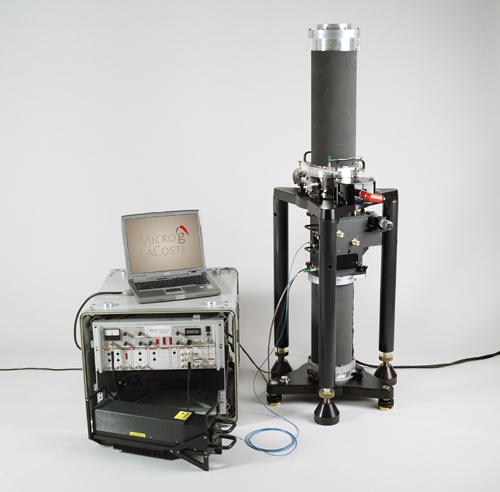
| Micro-g LaCoste: FG‑5 absolute gravimeter, (diagram), used in national labs to measure gravity to 2 µGal accuracy |


- National Institute of Standards and Technology (NIST): NIST Improves Accuracy of ‘Watt Balance’ Method for Defining the Kilogram
- The U.K.’s National Physical Laboratory (NPL): An overview of the problems with an artifact-based kilogram
- NPL: Avogadro Project
- NPL: NPL watt balance
- Metrology in France: Watt balance
- Australian National Measurement Institute: Redefining the kilogram through the Avogadro constant
- International Bureau of Weights and Measures (BIPM): Home page
- NZZ Folio: What a kilogram really weighs
- NPL: What are the differences between mass, weight, force and load?
- BBC: Getting the measure of a kilogram